Showing posts with label cycling. Show all posts

6.18.2016

Riders - Know Your Route

Several weeks ago, I was with a group riding a route that used very common roads.  I noticed the rider(s) in front looking back occasionally and asking "which way?"  We weren't in a remote area or on an unusual route by any means.  They clearly didn't know the route.  After a short while, I spent my time up front to ensure we took all the right turns and avoid any "bonus miles".

Confession coming...  Toward the end of this ride, a little mean streak surfaced and I bet a fellow ride leader riding beside me that the rider up front was going to miss the turn. When the turn approached, it seemed as if he was going to take it, but then kept riding straight.  Here is where I should have yelled "RIGHT". Instead, I silently pointed the right turn and made the turn with the remainder of the group and let the "wrong way riders" figure out they goofed.

While winning a bet is always nice; this scenario, unfortunately, is actually all too common.  So why is it important to know the route?

First, and foremost, knowing the route is a matter of safety. If you are up front and don't know the route, you can endanger the riders behind you. I have witnessed several instances where a rider up front doesn't know what to do when a navigation choice is required.  All of a sudden they are slowing and weaving out of their line while they try to find out what to do.  The riders behind are then at risk of potentially running into the front rider or moving too far into the road.

Second confession... This happened to me once and I was the cause of a minor incident with one of the riders behind me crashing. Fortunately it was a minor incident and the rider and bike were OK.  In this case I knew the route, but there was construction and I didn't recognize the street until too late and I tried to make the turn anyway.  I slowed unexpectedly and caused a rider behind me to overlap wheels and fall.

Secondly, knowing the route is important should you end up riding on your own.  If you get dropped or even have a mechanical issue, you may find yourself separated from the group.  You should know the route so you can safely get home or catch back up to the group at a break stop.  Knowing the route may also allow you to take a shortcut to get back with the group.  Some riders are very skilled in using shortcuts to avoid a challenging part of the ride and still remain with the group for large portions of the ride.
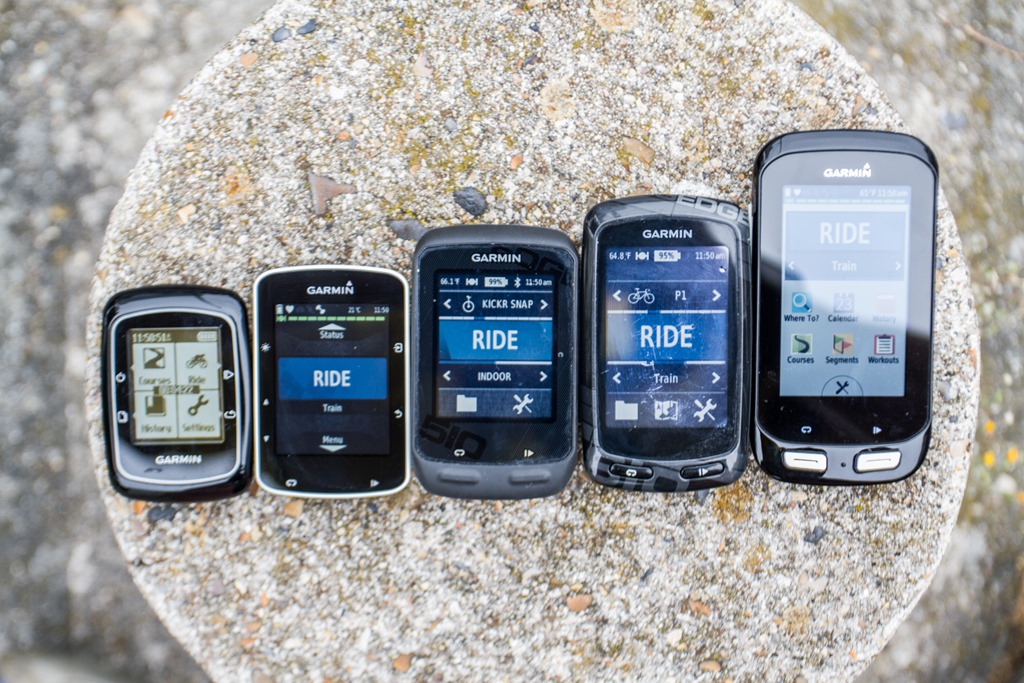
In a later post I will talk about using electronic devices like a Garmin Edge cycling computer where it will display the route, cue sheet, and provide turn reminders. I have a Garmin Edge 520 and I love it. These devices are amazing and a great asset to a ride.  However, they are not a substitute for knowing the route.  I consider them to be an enhancement or an added tool for following the route.

Cycle Folsom makes it very easy to learn the route.  Every meetup notice has a Ride With GPS route linked that can be reviewed.  If you do not have an account, simply sign up - it is free.  Then follow the link in the meetup ride description and you can examine the ride.  I like to click through the cue sheet as this will show me all the turns.  I will also note the planned break location(s) and any climbs.

Ride leaders take the effort to provide a safe and well planned ride.  Part of that effort is creating a route and making it available to all riders in advance of the ride start.  Show them some courtesy in learning the route and doing your part to ride safely.


6.12.2016

One Cool Loon

Mike and Brad at Loon Lake
Scott McKinney's Train for the Tour (TftT) series is Cycle Folsom's most grueling set of training activities.  These 10 progressively more difficult century rides from February to June will get you in condition to do almost any extreme endurance cycling event you can find - including the Death Ride. One of the hallmarks of this series is the camaraderie that the ride creates.  All participants, whether you are the fastest or the slowest rider, are embraced.  In many ways, this training creates more memories than the "big event" everyone is targeting.

Yesterday was the 9th ride in the 2016 series - One Cool Loon.  This is a 100 mile out and back from Cool to Loon Lake and features 10,000 feet of climbing with about 7500 feet of that being on the way out. This type of ride is always a challenge for me. Being a Clydesdale sized rider, a big climbing ride is always tough.  This is especially true of rides where the climbing is grouped into one section as this does not allow for recovery time.
One Cool Loon Elevation Profile

The first part of the ride is relatively flat as we headed toward Georgetown.  Georgetown is a great little town of about 2400 people that epitomizes "small town" America.  There is a small baseball diamond that reminds of the one where I learned how to play baseball as a kid in a small Indiana town.

Stumpy Meadows
On leaving Georgetown, we stayed on Wentworth Springs Rd for about 35 miles. Most of the effort is climbing. The climbing is not terribly steep, but there are a couple of challenging sections that make you take notice. A short break at Stumpy Meadows was a needed relief as we had climbed 4,000 feet and completed 29 miles.

Enrico near Loon Lake
From Stumpy Meadows, we continued climbing on Wentworth Springs Rd all the way to Ice House Rd where we pause for a quick break before the final 7 mile climb to Loon Lake.  This section of road is beautiful and there is an amazing view looking east into a picturesque canyon.  This 20 mile section from Stumpy Meadows to Loon Lake is mostly climbing with an additional 3500 feet adding to a total of 7500 feet.

Vu dunking his head in Loon Lake
At Loon Lake, the elevation is about 6300 feet, about the same as Lake Tahoe.  This is about a 5000 foot elevation gain from the starting point in Cool.  This alpine lake is beautiful and right off a postcard.  I was happy to get to the turnaround point and take a break.  While I felt good at this point, I was struggling to eat and drink. Neither food nor drink sounded good and I had to force myself to consume something.

Before we started heading home, Vu put his head in the water following Mike's pre-ride announcement of this head dunking tradition.

The trip home started off great.  The first 7 miles leaving Loon Lake were all down hill.  During this descent, we gained more appreciation for the actual climb.  Turning back onto Wentworth Springs Rd, we started a 5 mile climb that was very taxing.  A couple guys stopped for a moment, but I was afraid to stop as I wasn't sure I could restart.

10 miles later we stopped in Stumpy Meadows for our final break.  There is a small climb out of Stumpy Meadows and I had the misfortune to get a flat.  Both SAG vehicles stopped to check on me and I used a floor pump to fill my tire.  Unfortunately, this also meant I was on my own for the last 30 miles.  Being tired and aching when alone seems much harder than suffering with others nearby. Nevertheless, I was able to let my mind wander and the time went by quickly.  I kept a steady pace and was relieved when I arrived in Georgetown as I knew there was only about 10 miles to go.  When the remaining distance gets to single digits, it is a great relief.

When I finally arrived in Cool, I was fully spent.  This was a very tough ride and I think I underestimated the difficulty.  I think the 7500 feet of climbing to Loon Lake took more out of me then I expected.  The return trip, while a net descent, was much more difficult than I thought it would be.  There were several challenging climbs on the return portion that really tested my stamina.  It is probably a mistake to underestimate any ride that has 10,000 feet of climbing.  I built some mental toughness doing this ride.

Special thanks to the SAG support from Lois and Cindy.  We all appreciate the extra help in accomplishing these challenging rides.

Chris Mumma also made a video of the ride that I am sure you will enjoy: Link.

5.02.2016

Inspiration

As I get older (and maybe a touch wiser), I realize that what inspired me in my younger days is not the same as what inspires me today.  I remember the 1981 49ers having a phenomenal season and winning the game against the Cowboys where Dwight Clark caught the winning touchdown pass from Joe Montana.  The 49ers then went on to win the Super Bowl.  And, I remember the “Miracle on Ice” when the US team beat the USSR and go on to win the Gold Medal.
Today, I realize that overcoming life’s challenges is more inspirational than sporting accomplishments.  While I still enjoy my favorite teams doing well, I find those who take what life throws at them and then keep going to be truly inspirational.  Two members in our club are examples of inspirational character that stand out to me.
Debbie Vogel


Debbie Vogel – Debbie joined Cycle Folsom last year and has been a regular rider since.  She is outgoing and always has a smile and positive outlook.  What you may not know is Debbie was diagnosed with stage IV breast cancer in November 2013. While battling cancer, she also filed for divorce. She refers to this as “I got rid of two cancers in 2014”. Debbie joined Cycle Folsom in April 2015, starting with the Gruppetto training series.  I remember the Gruppetto ride where I first met Debbie and she was wearing sneakers while the bike had SPD pedals.  She is also a sponge for cycling knowledge to improve as quickly as possible.  That determination left an impression.  Debbie has since replaced her old bike and has pedals and shoes that match one another.  Debbie’s own words sum up why I think she is an inspiration – “the cycling club and its ride leaders, through their support and leadership, helped me to change my identity from cancer patient to an athlete.”
Chris Mumma

Chris Mumma – After suffering a serious head wound in Panama as a Navy corpsman, Chris had many obstacles to overcome including hearing loss, grand mal seizures, and temporary paralysis.  These challenges proved difficult and Chris became depressed and his weight went to 300 pounds.  However, Chris knew he had to make a change and he did, “knew that if I wanted to continue to live I needed to lose the weight.  I changed my diet and I joined a gym.”  After joining the gym, Chris took up cycling where he lost the weight.  He then encountered Cycle Folsom at a Ride2Recovery event and he joined soon after.  Chris has become one of the most prolific and fastest riders in the club.  Chris and I became friends shortly after he joined Cycle Folsom.  It turns out we have a lot of common interests such as our mutual enjoyment of Science Fiction and Blue Moon beer.


In 2014, Chris was diagnosed with cancer in his shoulder.  He has undergone two full rounds of chemo-therapy and is 75% done with the third round.  Shortly after completing his second round of chemo, Chris completed the 2015 Deathride.  For Chris, cycling has been a key to overcoming life’s challenges – “cycling has kept me going and I cycle when I would rather sit on the couch and be sick. Cycling has been the best part of my treatment to beat this disease and I plan on cycling until I can no longer do it.”  Q'APLA, my brother!

For me, Chris and Debbie are an inspiration for overcoming the obstacles life throws in your way.  I think we all can take their example as a guiding light for courage in facing those challenges.


=======================================================================

On Tuesday evening (May 3rd), there is a fundraiser being held at Pete's Restaurant & Brewhouse in Folsom from 5:00 - 8:30.  Free buffet from Pete's Restaurant and silent auction.  Please join in helping to raise funds for Chris.

See the Facebook Event for more info.

I hope you can join us!

4.27.2016

Nutrition 101 - Fuel For The Ride

One of the great things about this time of year as Spring takes hold, is the great cycling events coming upon us.  For many of us, we have big goals being realized in the Summer.  Maybe it is the Death Ride or the Davis Double Century.  You might have plans for your first century or metric century.  Whatever your goal may be, it is likely to involve a big ride with lots of miles.


2016 - Dutch Flat
Just over a week ago, many Cycle Folsom riders joined in the Train for the Tours (TftT) ride - TftT #5, Not Flat to Dutch Flat (a perfect ride description if there ever was one).  In the TftT series, I think this is where the rides go from difficult to hard (and then insane).  In this transition in difficulty, it is important to make sure you are prepared to with a good hydration and nutrition plan.  In the last post, we gave you a good rundown on hydration - Hydration 101.  This time, Aaron Terrazas gives us a great rundown on nutrition.

======================================================================

Fuel For The Ride by Aaron Terrazas:
 
There are two ways to eat, fuel for your body (breakfast, second breakfast if you are a Hobbit, lunch and dinner), and fuel for your ride. Let's talk about fuel for the ride.
 
When, what and how much you eat, is a little different for everybody, so it's important to know what your body needs for different types of rides. I find it best to eat small, not big, and spread out your fuel intake over the entire ride. This allows your body to digest food easily, rather than having a brick in your stomach while riding. 
It is very important not to wait until you are hungry or feeling fatigued by staying ahead of your body and eat every 40-50 minutes. If your are pushing the pedals hard, you may find it beneficial to eat every 30 minutes. On the opposite spectrum, if you are on an easy recovery ride, you may only need to eat once an hour. Your ride intensity and ride duration will determine what and when you need to eat and how much fuel your body will need on a ride, so have your ride fuel plan and food ready the night before.
 
On a long endurance ride of 80-100 miles, I have found it beneficial to double up your food intake at 40-50 miles and again around mile 80. On longer rides, don't not to wait for the rest stops, eat on the bike. This is where planning ahead with a ride fuel plan and having your food organized in your pockets comes in handy. You will find it much easier to eat while on the bike by having your food open and ready to eat (just don't do this with gels or it will go bad really quickly - just saying).
 
Choose ride fuel foods that are natural, easy to eat, low in sugar (NOTE: pro-racers do drink soda, but they are on a different level than we are) and offer fuel that your body can process quickly during a ride. Fuel for the ride is the key here because it's about fuel your body can use during the ride. This is why it is better to stay away from anything heavy like sandwiches and hamburgers because our bodies tend not to process the sandwich or hamburger during the ride quickly enough to be used during the ride.  
 
Some food bars may seem healthy, but are basically candy and do not offer a lot of nutrients your body can use during a ride. It is best to stay away from junk food like cookies and candy because our bodies need real food, nutrients and fuel that it can process and use quickly. 
 
Here are a few things I eat on the bike and why I eat them. 
I typically eat Enduro Bites (http://endurobites.com/why-enduro-bites/) because they are easy to eat on the bike quickly, they are healthy and easy to digest. I found that eating Cliff bars while on the bike can be challenging because they do not go down easily, while Enduro Bites are much easier to get down at 20-30 mph. 
 
I also include some gels on my rides, I personally like Cliff Shots, but there are many too choose from (http://www.clifbar.com/products/Athlete-Series/clif-shot/razz). These are great to get quick sugar into your body and get your energy back up.
Honey Stinger (http://www.honeystinger.com/), but they can't be eaten while in the bike, so I only take them if I know there will be a rest stop.
 
Kind Bar (http://www.kindsnacks.com/store/types/kind-bars), l are one of my favorite pre-ride fuels and mid-ride fuels. They can be a little tricky to eat while riding because they stick to the wrapper.
 
On a long ride, I love a banana and a peanut butter and jelly sandwich. 
Pre-Ride fuel (the day before) is also important and what you eat depends on the type of ride (long vs short, hard vs easy). For the sake of discussion, let's stick to the long endurance ride fuel. Depending on what you like to eat, you can go with pasta, veggies, and/or protein (steak or fish). Some people like to eat eggs, a bit of steak or potatoes right before a ride; personally I am not a morning person, so usually just have a Coffee Late, a banana and a Kind Bar.
 
Here are a few tips help you on your next long endurance ride:
 
TIP: Always take more than you will eat, you never know when your body will just need more fuel.
 
TIP: Plan ahead; know what you will eat and when you will eat it. 
 
TIP: Don't wait to eat until you are hungry or your energy to drop out.
 
TIP: Listen to your body, learn how it responds to different foods on a ride, we all are a little different, so find what is right for you.
 
TIP: Eat every 45 minutes and double up midway through a long endurance ride and a again in the last 20 miles so you can have enough to finish well.
 
TIP: Eat real food that is easy to digest and avoid processed foods and junk foods with high sugar, and corn syrups (HFCS).

4.07.2016

Hydration 101

As we start moving into Spring and everyone is thinking of the big rides they have planned for the Summer, one of the key things to consider is your hydration game plan while on long endurance rides.  In 2015 as I was preparing for the Death Ride, I had dialed in a hydration system that worked well for me and kept me out of trouble.  The Train for the Tours (TftT) series leading up to the Death Ride let me make some mistakes, try different options and gain confidence that I had solved this part of my riding tool kit.

A recent ride, the 2016 TftT #4 to Plymouth, Union Mine and Prospector, served as a reminder that following that plan is vital as I was a little over confident and a tad arrogant about this key preparation and I had a near miss on the climbs up Union Mine.

My time tested plan for hydration is relatively simple.
  1. I like to use large, well insulated water bottles.  I have the 24oz Camelbak Podium and the 20oz Camelbak Podium Ice bottles.  The Podium Ice bottles are worth the extra few dollars.  Last year, Rob Pucci showed me this bottle and, more importantly, he showed be the unmelted ice cubes still in the bottle after a 50 mile ride.  On a hot summer ride, cold water is an amazing treat and actually helps you to drink more frequently.  Warm water is not very quenching.  Add a lemon-lime flavoring from a Nunn table to that warm water and drinking becomes a real chore. 
  2. I use  Nunn or Osmo as an electrolyte supplement.  The Nunn tablets are very portable and I will have extras in a "pill purse" or a plastic baggie.  The Osmo also comes in single serving containers for easy handling.  I am sure there are other excellent products.  For me, these two options work fine and I have not found a reason to try anything else.  I like any flavor other than lemon-lime.  This is what I used for the Carson Pass TftT ride.  I still remember that taste.
  3. The most important thing is to actually drink from your bottles.  I've read a lot about how much you should drink and various factors impacting hydration.  The important point is to figure out how much YOU should be drinking.  Everyone is different and reacts to the cycling conditions differently.  For me, I found that I should be consuming about 1.5 - 2 bottles an hour depending upon the cycling conditions.  
  4. The route is an import influence on your hydration as well.  I like to look at the stops and see where I can refill.  I've had to take 3 bottles on rides where there were larger gaps between stops.  This also helps me gauge my water consumption.  For example: if there is about 25 miles between stops, I know both bottles should be empty when I get to the rest stop.  If they are not empty, this serves as an "alarm" that I am off the plan. 
  5. Water stops are a good place to actually drink water too.  I know this seems obvious, but people will start explaining how their brake was rubbing during the last climb, using the facilities, cleaning their sunglasses, or eating a snack.  Then, before you know it, that sadistic ride leader is yelling "60 seconds" and you barely have time to get your helmet and gloves back on and you haven't had any water.  So, make drinking water and refilling your water bottles a priority at a water stop - after you adjust that rubbing brake, of course.
  6. While on the bike, you obviously need to drink.  It important that you get comfortable grabbing a bottle, taking a drink, and returning the bottle to the cage while maintaining good order in a group.  This includes keeping your pedals turning so you don't make the rider behind you nervous (see Paceline Skills).  If you are not comfortable drinking while in a group, then you run the risk of skipping vital water consumption and run the risk of getting dehydrated.  So, practice this valuable skill so you stay hydrated in a group situation. 
  7. One "trick" I like to use is to have my Garmin 520 remind me to drink on plan.  I set the Garmin's Auto Lap feature to beep every 5 miles which prompts me to drink.  As a general rule, I want to consume about a 1/2 of a bottle every 5 miles.  This helps me stay on plan, especially early in the ride, to avoid problems later.
  8. I also like to use Hammer Endurolytes.  I usually take 2 tablets at each stop and carry them in a pill box or plastic baggie.  To be honest, I am not sure these tablets do anything.  But, I haven't  cramped while using them so I hate to mess with a successful formula.
  9. Preparation is an equally important component to good hydration.  I have a spreadsheet I use that helps calculate how much fluid I will probably consume.  This uses a formula based on your weight, ride distance, and climbing.  I use this information to identify the number of water bottle refills I will need so I can make sure I carry enough electrolyte supplements.  The day before the ride, I will get them all counted (with a few extras) and packaged and then put them with my cycling gear.
  10. Be well hydrated before the ride.  I like to ensure I am well hydrated the day before and the morning prior to the ride.  I will make a concerted effort to drink plenty of fluids and continue this all the way up to the ride start.  I don't overdo it so that I am constantly heading to the bathroom.  A few hours before the ride, I will drink 16 oz with an electrolytes supplement. There is little benefit in being behind on fluids even before you start the ride.
  11. Cooler riding weather can be problematic as you can be fooled into drinking less than you need.  We always think heavy sweating is how we become dehydrated.  However, exhaling is a big source of fluid loss and cooler weather actually makes your perspiration evaporate more quickly.  So, don't get careless about hydration when it is a cool day.
  12. Test your plan and make changes to optimize it for your needs.  Get the knowledge you need and test your hydration plan.  What works for me may not work for you - maybe you like warm lemon-lime flavored water.  One thing I would caution you on is making big changes in a targeted event.  The Death Ride, for example, is not a good place to try something new.
  13. Finally, watch for subtle signs that you are dehydrated.  Dehydration will degrade your performance and failing to replenish your electrolytes can lead to cramping.
As I mentioned above, I didn't follow my plan during the last TftT ride.  I had turned my auto lap feature off and the cool weather tricked me into not drinking enough.  By the time I got to Plymouth, about 30 miles into the ride, I should have consumed both water bottles.  Instead, I had almost 1.5 bottles of water remaining.  Thus, I had only consumed about a half bottle.  I felt fine and didn't worry about the big departure from my plan.  Shortly after the stop in Plymouth, we were heading up one of the steep grades on Union Mine.  I happened to look down at my Garmin and noticed an unusually high heart rate. My first reaction was my chest strap was not aligned or the sensor was not snapped in well.  The next part of the ride was mostly descending and my heart rate quickly declined but not down to normal levels.  After thinking about this for a few minutes, the two data points clicked - low water consumption and my slightly elevated heart rate.  I was starting to dehydrate! Fortunately, I was upon a rest stop and was able to take a long break while we regrouped.  I drank a healthy portion of water and relaxed for a while.  The remainder of the ride, I was very diligent in drinking on plan and recovered from my mistake.  I was lucky.

On a final note, don't forget your post ride hydration.  A pitcher of beer at Pete's will make that ride more memorable when you share your epic effort with your cycling mates.  Hey Chris, did I tell you about my brake rubbing on the Union Mine climb?

3.05.2016

Paceline Skills

Today was one of those days where the weather is giving you a perfectly reasonable excuse to stay inside and relax while your fitness conscience is saying HTFU.  Unfortunately, when you are a ride leader and you post a ride, your choice is much more limited.

Joel and I had posted a Gruppetto Graduate ride going up to Newcastle and targeting climbs on Callison and Indian Hill roads. The intent is to allow riders who recently completed the Gruppetto training series to transition into Peloton group rides. These rides also allow riders looking for a more casual pace to join.

Another purpose of these rides is to help newer riders practice group riding skills and offer constructive feedback to improve these skills.

Today's ride finished with a long jaunt down AF.  This is a great road for working in a paceline.  At a stop light, Joel took the opportunity to talk to a rider and pointed out one of the more subtle skills in group riding that can make a big difference in a paceline's dynamics - soft pedaling.

When you are in a paceline, I find that it is important to keep your head up and pay attention to your surroundings.  I tend to "look through" the rider in front of me instead of locking my focus on his rear wheel.  However, when that rider stops pedaling, my attention will shift immediately to that rider. A lack of pedaling is like a caution light that alerts you that something is wrong and braking may soon follow.


If you are a rider that tends to pedal - stop - pedal - stop, you are likely sending confusing messages to the rider behind you: go - caution - go - caution.  This can be disconcerting.

Rather than stop your pedaling when you need to slow down, there are a couple of techniques to use.  One is to soft pedal.  Soft pedaling simply means you are pedaling slowly without adding any power to the drive train.  The rider behind you will see your pedaling being constant and stay more relaxed.

Another technique is to catch more air by sitting up taller or moving to the side slightly to get partially out of the draft of the person ahead of you.

The important point is to control your speed AND do so in a deliberate fashion that keeps the paceline in a calm state.  So, think about the value in soft pedaling to "communicate" to the rider behind you.  She/he will appreciate it.

Want to learn more about paceline skills?  Check out some of the instructional videos at cyclefolsom.com.

By the way, if you want some CF gear like the shirt shown above, you can buy it here.

8.19.2010

Georgetown

Preview
Counter clockwise; we'll be heading out Green Valley & return on Salmon Falls with Prospector's Grade thrown in for good measure. RSVP via Meetup.
Route map: RideWithGPS or MapMyRide
Meet location: Parking lot across from Karen's Bakery/Bicycles Plus
Leave time: 8:00 am
Distance: 70 miles
Climbing: Yup, its all climbing heading out. About 6,000-7,000 feet.

Ride Report
My ride stats: 71.5 miles in 4:20 ride time for an average speed of 16.5 mph and 6,200 ft of climbing.

The weather was great for cycling. The sky was little overcast in the morning keeping it cool enough for some to wear arm warmers, and comfortable descending the foothills later when it warmed up. Phil, Dave, Gary, and I left downtown Folsom, and then met up with Oz on Green Valley. The rolling climbs on Green Valley got everyone warmed up and ready for the climbs to come. I ended up getting a flat on Starbuck, but this allowed Bicycles Plus riders Jeff & Steve to join up with our group. We were all totally surprised to see that Deer Valley had fresh, smooth tarmac and some couldn't help from attacking on the big rollers to Rescue.

After our water stop at the Rescue Fire Dept, Gary headed out on his own through Cameron Park and the rest of us headed for Lotus. Oz set a fierce tempo up over the climb on Lotus Road, whereas Phil and I were more interested in bombing the downhill side. We all made our way over to Prospector's Grade; the wise climber knowing that this was only mile 28 of a 70 mile ride with another 6 miles of steady climbing to go, opted to settle into a an easy tempo and not race for the top. Of course, if you're turning around at the top to head home early, I guess you can push the pace. Steve took the KOM and then headed back home due to time constraints. The rest of us, Phil, Oz, Dave, Jeff, & I, forged on to Georgetown.

After knocking back some fuel in Georgetown (for me that was 2 snickers and a Coca-Cola), we tore out of Georgetown looking forward to some descending. I was able to get a gap off the front at first, but then Phil resorted to drafting off some cars to catch my wheel. Oz caught up to us when we starting hitting some of the rollers and the 3 of us worked together to keep the pace going. We were almost to Cool when Oz couldn't ride his flattening tire anymore. After pulling out a couple of thorns and slapping in a new tube, we were all gruppo compacto when we rolled into Cool. Phil did all the hard work on the slight descent (but into a head wind) from Cool to Pilot Hill; the rest of us were more than willing to free-wheel it in his draft.

After a little bit of climbing from Hwy 49 to the "rhino" on Salmon Falls, the downhill attacks started coming; first Jeff, then Phil. I was just happy to catch their wheels as they went blowing past. Me, I was waiting for the last two little climbs on Salmon Falls and then the roll-out to Green Valley. Phil, Jeff, & I crossed the South Fork bridge together and starting grinding up the first climb. The cumulative climbing for the day could be felt, and felt good; I was just on the edge of cramping. I made it over the top first and within sight of Phil. I tried to descend fast, but rest my legs a little for the next climb up to Falcon Crest. I made it up to Falcon Crest and couldn't see Phil or Jeff and was feeling good for the run-out to Green Valley. I had a good tempo going, but I was expecting Phil & Jeff to ride up on me at any moment. I was surprised to make it to Green Valley without them in sight.

I made it back to downtown Folsom and chatted with Dave when he rolled in little bit latter. Oz, Phil, & Jeff had all headed on home while rolling into Folsom. It was a great day of riding!

7.06.2010

Tuesday Climbing Ride


There was more challenges tonight than just the tarmac tilting upwards. The mercury was topped out around 95 and the flags were saluting a 10+ mph wind. Colleen and I were up for the challenge & opted for all the climbs with a short break at the park. My Garmin logged 29.6 miles in 1:50 with an average speed of 16.0 mph and 2,300 feet of climbing. Folsom Tuesday climbing ride, regular route.

7.05.2010

Holiday Disco Dance

Since the 4th of July fell on a Sunday this year, some of us with Monday as a holiday decided to ride down to Discovery Park and back from Folsom. Kevin, Joel, John and myself were joined by Graham (Gram?), a rider new-to-Cycle Folsom. We did the trail dance with a few thousand other cyclists that had the same idea as us. The plan was to ride a mellow recovery pace. Everyone cooperated at the front and we completed the 57.5 mile ride in just about 3 hours, averaging about 18.5 mph (a little faster than I was expecting). Great ride guys!

7.03.2010

Coffee Republic route ride

The Cycle Folsom Peloton group set out at 07:30 to ride the Lincoln-Chili Hill-Power House Loop. This set up a perfect "fox & hound" ride for the Performance group. Could the big dogs close down a 1/2 hour gap on the foxes up the road? Oz, Eric and I set out at 08:00 sharp opting for the very similar Coffee Republic ride route that snakes up to Penryn from Folsom, then hits the quick rollers on English Colony, winding through the country roads of Placer County, and climbing the stair-step Ridge Road. Our goal was to catch the Peloton group on the speedy run-in on Auburn-Folsom Road.

The three of us worked well together and kept our small group together, even over Ridge Road. We took a quick water stop at the gas station in Newcastle, then quickly got back to business of hunting some foxes. Once on Auburn-Folsom we got our rotations organized and all of us contributed to the pace. Next thing you know, there were a couple of cyclists up the road; perfect carrot. I could tell that all of us were thinking, "OK, just catch those guys and take it from there." We reeled them in. As we passed, we heard "alright, now we got a tow home." Turns out it was Stan and Chuck from the Peloton group! Foxes caught!

OK, I have to be honest with you. Back at the gas station we decided to drop Indian Hill and hit Powerhouse Road (the Peloton's route). This shortened-up our ride a little. Also, it sounds like the Peloton group had some bad luck with mechanicals and route finding. All in all, it was a great ride for the three of us finishing in about 2 1/2 hours and averaging 18 mph over 46.5 miles with about 2,800 ft of climbing.