6.28.2016

A Tale of Two Rides

Yesterday, we completed the 10th and final century ride in the Train for the Tours (TftT) series for 2016.  This one was an out and back from Sly Park to Carson Pass and included more than 10,000' of climbing, riding at altitudes above 7,500’ for much of the ride and some tough climbs like Carson Pass and Mormon Emigrant.  A tough ride by any measure.


I did this ride last year and I thought it would be interesting to compare my experiences since they were so different.  Last year, I thought the ride was a brutal experience.  I was totally exhausted and wiped out at the conclusion.  This year I felt good the entire ride and had "gas in the tank" at the end. 

Why the difference?

Thanks to the Garmin Edge and Strava, I can compare statistics.

The differences between the two rides are very minor.  Moving time, average speed, cadence, and average heart rate are about the same.

The only significant differences are the ride temperature and overall ride elapsed time.  The temperature was 7 degrees cooler and I finished the ride 20+ minutes faster.

It looks like statistics do not tell the full story.  What about my ride game plan?

This ride I tried a few minor changes to my approach to a long endurance ride.  I didn't want to make any big changes as I thought it was a little too close to the Death Ride to make any significant changes.  But, I did have a few areas I thought warranted some "tweaks".

First, I had been having problems drinking fluids during the latter part of the ride.  I have been using electrolyte tablets such as Nuun and Gu. However, I have been getting so absolutely sick of the taste, that I dreaded drinking.  This was further exacerbated when the fluids got warm.

So, I decided to try using Endurolytes (electrolyte pills) and plain water when I was tired of the taste.  This was an amazing improvement.  I was drinking delicious cold water in the last half of the ride as if it were an ice cold beer at a baseball game.  Swallowing a couple of pills was easy when chased by the ice cold water.

Secondly, I tried eating in a snack mode the whole ride.  I added a small frame bag to my top tube where I had a mix of dried fruits, pistachios and seeds.  This allowed for easy access where I could simply reach down and grab a small portion as I was riding.  I also put some oranges with the SAG vehicle as I find oranges clear out that "dry mouth" feeling when breathing hard for long periods.

This approach also helped the 3rd of my ride tweaks - the minimal stop.  I noticed more experienced riders skipping breaks or making very quick stops.  I then looked at many of my rides and I noticed my break times seemed excessive.  Last year's Death Ride, for example, I had nearly 3 hours in non-riding time. My TftT breaks were about an hour.  I am all for breaks, but I don't seem to get much benefit after a few minutes.  I focused on replenishing my water, eating a few orange slices and then getting back on the bike - less than 5 minutes.  Since I was eating while riding, I didn't need to worry about eating during the breaks.  On this ride I had about 20 minutes worth of breaks (4 minutes per break) - 20 minutes below last year's net break time.

Finally, I focused on a manageable and steady pace.  I normally ride at a steady pace, but I made an extra effort to have gas at the end and thus be even more conservative in the beginning of the ride.  As one of the heaviest riders in CF, hills are especially challenging and I have to be careful not to burn out on a big climb. I may be slow, but I figured I would be better off minimizing total time vs. reducing just the ride time.  This also worked well.  Last year, I felt very good on the early Mormon Emigrant climb, but the Carson and Silver Lake (Tragedy Spring Rd) climbs were miserable. Brutal even.  I had to stop repeatedly to recover.  This year, the climbs were hard, but I only stopped once when some other riders were stopped as well.  Last year's "Tragedy Climb" was surprisingly easier. When I finished the ride, I felt good.  Tired, but not wiped out or exhausted.

Overall, I was extremely happy with the ride.  From a perceived difficulty perspective, I would rate the Iowa Hill, Loon Lake, and Rainbow and Roses rides as harder than this one.

I learned a few valuable lessons.  First, always be open to improvement.  While my changes were seemingly minor and the ride statistics were nearly identical, my perceived difficulty was dramatically improved.  Second, stick with your plan.  I could see riders not far ahead of me and I could have caught up.  Instead I stuck to my planned pace and caught up due to my faster breaks and ended up finishing ahead of about a half dozen other riders who actually had faster average moving speeds, but used more and longer breaks.

The Death Ride is less than two weeks away and I have a plan I think will work well.  I think I am ready!


6.18.2016

Riders - Know Your Route

Several weeks ago, I was with a group riding a route that used very common roads.  I noticed the rider(s) in front looking back occasionally and asking "which way?"  We weren't in a remote area or on an unusual route by any means.  They clearly didn't know the route.  After a short while, I spent my time up front to ensure we took all the right turns and avoid any "bonus miles".

Confession coming...  Toward the end of this ride, a little mean streak surfaced and I bet a fellow ride leader riding beside me that the rider up front was going to miss the turn. When the turn approached, it seemed as if he was going to take it, but then kept riding straight.  Here is where I should have yelled "RIGHT". Instead, I silently pointed the right turn and made the turn with the remainder of the group and let the "wrong way riders" figure out they goofed.

While winning a bet is always nice; this scenario, unfortunately, is actually all too common.  So why is it important to know the route?

First, and foremost, knowing the route is a matter of safety. If you are up front and don't know the route, you can endanger the riders behind you. I have witnessed several instances where a rider up front doesn't know what to do when a navigation choice is required.  All of a sudden they are slowing and weaving out of their line while they try to find out what to do.  The riders behind are then at risk of potentially running into the front rider or moving too far into the road.

Second confession... This happened to me once and I was the cause of a minor incident with one of the riders behind me crashing. Fortunately it was a minor incident and the rider and bike were OK.  In this case I knew the route, but there was construction and I didn't recognize the street until too late and I tried to make the turn anyway.  I slowed unexpectedly and caused a rider behind me to overlap wheels and fall.

Secondly, knowing the route is important should you end up riding on your own.  If you get dropped or even have a mechanical issue, you may find yourself separated from the group.  You should know the route so you can safely get home or catch back up to the group at a break stop.  Knowing the route may also allow you to take a shortcut to get back with the group.  Some riders are very skilled in using shortcuts to avoid a challenging part of the ride and still remain with the group for large portions of the ride.

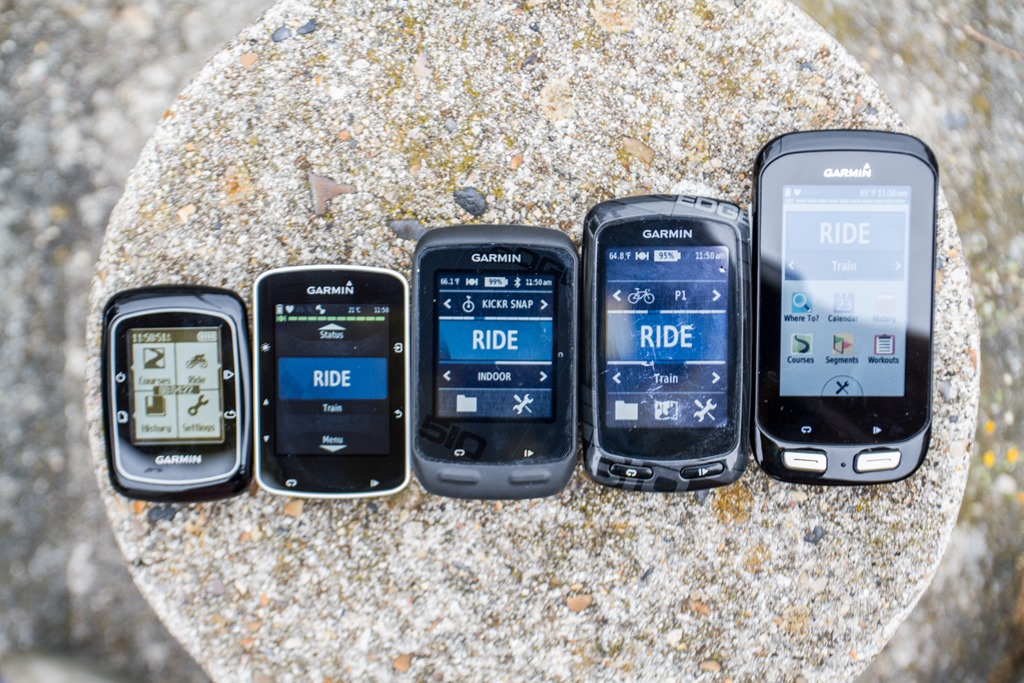
In a later post I will talk about using electronic devices like a Garmin Edge cycling computer where it will display the route, cue sheet, and provide turn reminders. I have a Garmin Edge 520 and I love it. These devices are amazing and a great asset to a ride.  However, they are not a substitute for knowing the route.  I consider them to be an enhancement or an added tool for following the route.

Cycle Folsom makes it very easy to learn the route.  Every meetup notice has a Ride With GPS route linked that can be reviewed.  If you do not have an account, simply sign up - it is free.  Then follow the link in the meetup ride description and you can examine the ride.  I like to click through the cue sheet as this will show me all the turns.  I will also note the planned break location(s) and any climbs.

Ride leaders take the effort to provide a safe and well planned ride.  Part of that effort is creating a route and making it available to all riders in advance of the ride start.  Show them some courtesy in learning the route and doing your part to ride safely.


6.12.2016

One Cool Loon

Mike and Brad at Loon Lake
Scott McKinney's Train for the Tour (TftT) series is Cycle Folsom's most grueling set of training activities.  These 10 progressively more difficult century rides from February to June will get you in condition to do almost any extreme endurance cycling event you can find - including the Death Ride. One of the hallmarks of this series is the camaraderie that the ride creates.  All participants, whether you are the fastest or the slowest rider, are embraced.  In many ways, this training creates more memories than the "big event" everyone is targeting.

Yesterday was the 9th ride in the 2016 series - One Cool Loon.  This is a 100 mile out and back from Cool to Loon Lake and features 10,000 feet of climbing with about 7500 feet of that being on the way out. This type of ride is always a challenge for me. Being a Clydesdale sized rider, a big climbing ride is always tough.  This is especially true of rides where the climbing is grouped into one section as this does not allow for recovery time.
One Cool Loon Elevation Profile

The first part of the ride is relatively flat as we headed toward Georgetown.  Georgetown is a great little town of about 2400 people that epitomizes "small town" America.  There is a small baseball diamond that reminds of the one where I learned how to play baseball as a kid in a small Indiana town.

Stumpy Meadows
On leaving Georgetown, we stayed on Wentworth Springs Rd for about 35 miles. Most of the effort is climbing. The climbing is not terribly steep, but there are a couple of challenging sections that make you take notice. A short break at Stumpy Meadows was a needed relief as we had climbed 4,000 feet and completed 29 miles.

Enrico near Loon Lake
From Stumpy Meadows, we continued climbing on Wentworth Springs Rd all the way to Ice House Rd where we pause for a quick break before the final 7 mile climb to Loon Lake.  This section of road is beautiful and there is an amazing view looking east into a picturesque canyon.  This 20 mile section from Stumpy Meadows to Loon Lake is mostly climbing with an additional 3500 feet adding to a total of 7500 feet.

Vu dunking his head in Loon Lake
At Loon Lake, the elevation is about 6300 feet, about the same as Lake Tahoe.  This is about a 5000 foot elevation gain from the starting point in Cool.  This alpine lake is beautiful and right off a postcard.  I was happy to get to the turnaround point and take a break.  While I felt good at this point, I was struggling to eat and drink. Neither food nor drink sounded good and I had to force myself to consume something.

Before we started heading home, Vu put his head in the water following Mike's pre-ride announcement of this head dunking tradition.

The trip home started off great.  The first 7 miles leaving Loon Lake were all down hill.  During this descent, we gained more appreciation for the actual climb.  Turning back onto Wentworth Springs Rd, we started a 5 mile climb that was very taxing.  A couple guys stopped for a moment, but I was afraid to stop as I wasn't sure I could restart.

10 miles later we stopped in Stumpy Meadows for our final break.  There is a small climb out of Stumpy Meadows and I had the misfortune to get a flat.  Both SAG vehicles stopped to check on me and I used a floor pump to fill my tire.  Unfortunately, this also meant I was on my own for the last 30 miles.  Being tired and aching when alone seems much harder than suffering with others nearby. Nevertheless, I was able to let my mind wander and the time went by quickly.  I kept a steady pace and was relieved when I arrived in Georgetown as I knew there was only about 10 miles to go.  When the remaining distance gets to single digits, it is a great relief.

When I finally arrived in Cool, I was fully spent.  This was a very tough ride and I think I underestimated the difficulty.  I think the 7500 feet of climbing to Loon Lake took more out of me then I expected.  The return trip, while a net descent, was much more difficult than I thought it would be.  There were several challenging climbs on the return portion that really tested my stamina.  It is probably a mistake to underestimate any ride that has 10,000 feet of climbing.  I built some mental toughness doing this ride.

Special thanks to the SAG support from Lois and Cindy.  We all appreciate the extra help in accomplishing these challenging rides.

Chris Mumma also made a video of the ride that I am sure you will enjoy: Link.

6.01.2016

The "Swing"

I just finished reading Boys in the Boat the other day. 
It is a great story about the University of Washington crew team that won the rowing gold medal at the 1936 Berlin Olympics.  There were many memorable things about the book, but one thing stuck with me that could translate to cycling was the “swing”.  In rowing, “swing” is a rare condition of harmony and perfection; where all rowers in the boat are seemingly in a state of perfect harmony.  They are so in tune with each other that they operate as a single entity of power, speed and grace.  Everyone is in “the zone”.

This “swing” thought has been with me for a while but I only put a name to it after reading the book.  A few weeks ago, I decided to help with a Gruppetto ride and I had the opportunity to talk with Steve Ward about group riding dynamics.  This was a great eye-opener as Steve shared some great thoughts about group riding that gave me a new appreciation of how fun a group ride could be when that group truly subordinated themselves to ride as one group rather than a bunch of cyclist riding as individuals in close proximity.  He talked about the idea of every rider working for the group and adjusting the effort to match the group’s capability.  This was fascinating as it opened up this new potential for elevating the enjoyment of cycling to a new plane; a breakthrough in understanding and clarity.

Could cycling have its “swing”?  Could we develop group riding to the state where we all ride in perfect harmony with each other?  The pulls up front are just the right duration.  The lead rider pulls off just as everyone expects.  The pace is perfect for the distance to go and matches all riders’ abilities.  The dropping rider catches back on without any wasted motion.  The group sacrifices personal needs and subordinates absolutely to the group.  Could this happen?  Could I ride in a group for a long effort in a cycling “swing”? 

I have experienced some great group rides where this seemed to happen in moments.  Some of the best rides were the night rides on the South Canal led by Vu and Mel.  I have had many other experiences like this in various group rides, but the moment of perfection is usually broken by a single act of personal need.  A rider pushes the pace, misses a turn, does a “hero” pull, has bad group riding skills, or many other reasons.

Many times I have experienced the “non-swing” rides were everyone seems like strangers on the same road.  Rider leaders are trying to “herd cats” on bikes who have left their group riding skill and knowledge at home.  Well organized pace lines get busted by self-minded individuals looking for a few minutes of rest on someone’s wheel.  You get the idea.


We have all learned the skills and techniques for group cycling, but the more I ride with a group the more I realize how much I have yet to learn about the true potential in a group of cyclists working
in harmony.  I think this will be a new goal of mine – to find some CF riders who want to ride in the “swing”.  Maybe riding in the “swing” could be the norm.  It will be interesting to find out.

5.02.2016

Inspiration

As I get older (and maybe a touch wiser), I realize that what inspired me in my younger days is not the same as what inspires me today.  I remember the 1981 49ers having a phenomenal season and winning the game against the Cowboys where Dwight Clark caught the winning touchdown pass from Joe Montana.  The 49ers then went on to win the Super Bowl.  And, I remember the “Miracle on Ice” when the US team beat the USSR and go on to win the Gold Medal.
Today, I realize that overcoming life’s challenges is more inspirational than sporting accomplishments.  While I still enjoy my favorite teams doing well, I find those who take what life throws at them and then keep going to be truly inspirational.  Two members in our club are examples of inspirational character that stand out to me.
Debbie Vogel


Debbie Vogel – Debbie joined Cycle Folsom last year and has been a regular rider since.  She is outgoing and always has a smile and positive outlook.  What you may not know is Debbie was diagnosed with stage IV breast cancer in November 2013. While battling cancer, she also filed for divorce. She refers to this as “I got rid of two cancers in 2014”. Debbie joined Cycle Folsom in April 2015, starting with the Gruppetto training series.  I remember the Gruppetto ride where I first met Debbie and she was wearing sneakers while the bike had SPD pedals.  She is also a sponge for cycling knowledge to improve as quickly as possible.  That determination left an impression.  Debbie has since replaced her old bike and has pedals and shoes that match one another.  Debbie’s own words sum up why I think she is an inspiration – “the cycling club and its ride leaders, through their support and leadership, helped me to change my identity from cancer patient to an athlete.”
Chris Mumma

Chris Mumma – After suffering a serious head wound in Panama as a Navy corpsman, Chris had many obstacles to overcome including hearing loss, grand mal seizures, and temporary paralysis.  These challenges proved difficult and Chris became depressed and his weight went to 300 pounds.  However, Chris knew he had to make a change and he did, “knew that if I wanted to continue to live I needed to lose the weight.  I changed my diet and I joined a gym.”  After joining the gym, Chris took up cycling where he lost the weight.  He then encountered Cycle Folsom at a Ride2Recovery event and he joined soon after.  Chris has become one of the most prolific and fastest riders in the club.  Chris and I became friends shortly after he joined Cycle Folsom.  It turns out we have a lot of common interests such as our mutual enjoyment of Science Fiction and Blue Moon beer.


In 2014, Chris was diagnosed with cancer in his shoulder.  He has undergone two full rounds of chemo-therapy and is 75% done with the third round.  Shortly after completing his second round of chemo, Chris completed the 2015 Deathride.  For Chris, cycling has been a key to overcoming life’s challenges – “cycling has kept me going and I cycle when I would rather sit on the couch and be sick. Cycling has been the best part of my treatment to beat this disease and I plan on cycling until I can no longer do it.”  Q'APLA, my brother!

For me, Chris and Debbie are an inspiration for overcoming the obstacles life throws in your way.  I think we all can take their example as a guiding light for courage in facing those challenges.


=======================================================================

On Tuesday evening (May 3rd), there is a fundraiser being held at Pete's Restaurant & Brewhouse in Folsom from 5:00 - 8:30.  Free buffet from Pete's Restaurant and silent auction.  Please join in helping to raise funds for Chris.

See the Facebook Event for more info.

I hope you can join us!

4.27.2016

Nutrition 101 - Fuel For The Ride

One of the great things about this time of year as Spring takes hold, is the great cycling events coming upon us.  For many of us, we have big goals being realized in the Summer.  Maybe it is the Death Ride or the Davis Double Century.  You might have plans for your first century or metric century.  Whatever your goal may be, it is likely to involve a big ride with lots of miles.


2016 - Dutch Flat
Just over a week ago, many Cycle Folsom riders joined in the Train for the Tours (TftT) ride - TftT #5, Not Flat to Dutch Flat (a perfect ride description if there ever was one).  In the TftT series, I think this is where the rides go from difficult to hard (and then insane).  In this transition in difficulty, it is important to make sure you are prepared to with a good hydration and nutrition plan.  In the last post, we gave you a good rundown on hydration - Hydration 101.  This time, Aaron Terrazas gives us a great rundown on nutrition.

======================================================================

Fuel For The Ride by Aaron Terrazas:
 
There are two ways to eat, fuel for your body (breakfast, second breakfast if you are a Hobbit, lunch and dinner), and fuel for your ride. Let's talk about fuel for the ride.
 
When, what and how much you eat, is a little different for everybody, so it's important to know what your body needs for different types of rides. I find it best to eat small, not big, and spread out your fuel intake over the entire ride. This allows your body to digest food easily, rather than having a brick in your stomach while riding. 
It is very important not to wait until you are hungry or feeling fatigued by staying ahead of your body and eat every 40-50 minutes. If your are pushing the pedals hard, you may find it beneficial to eat every 30 minutes. On the opposite spectrum, if you are on an easy recovery ride, you may only need to eat once an hour. Your ride intensity and ride duration will determine what and when you need to eat and how much fuel your body will need on a ride, so have your ride fuel plan and food ready the night before.
 
On a long endurance ride of 80-100 miles, I have found it beneficial to double up your food intake at 40-50 miles and again around mile 80. On longer rides, don't not to wait for the rest stops, eat on the bike. This is where planning ahead with a ride fuel plan and having your food organized in your pockets comes in handy. You will find it much easier to eat while on the bike by having your food open and ready to eat (just don't do this with gels or it will go bad really quickly - just saying).
 
Choose ride fuel foods that are natural, easy to eat, low in sugar (NOTE: pro-racers do drink soda, but they are on a different level than we are) and offer fuel that your body can process quickly during a ride. Fuel for the ride is the key here because it's about fuel your body can use during the ride. This is why it is better to stay away from anything heavy like sandwiches and hamburgers because our bodies tend not to process the sandwich or hamburger during the ride quickly enough to be used during the ride.  
 
Some food bars may seem healthy, but are basically candy and do not offer a lot of nutrients your body can use during a ride. It is best to stay away from junk food like cookies and candy because our bodies need real food, nutrients and fuel that it can process and use quickly. 
 
Here are a few things I eat on the bike and why I eat them. 
I typically eat Enduro Bites (http://endurobites.com/why-enduro-bites/) because they are easy to eat on the bike quickly, they are healthy and easy to digest. I found that eating Cliff bars while on the bike can be challenging because they do not go down easily, while Enduro Bites are much easier to get down at 20-30 mph. 
 
I also include some gels on my rides, I personally like Cliff Shots, but there are many too choose from (http://www.clifbar.com/products/Athlete-Series/clif-shot/razz). These are great to get quick sugar into your body and get your energy back up.
Honey Stinger (http://www.honeystinger.com/), but they can't be eaten while in the bike, so I only take them if I know there will be a rest stop.
 
Kind Bar (http://www.kindsnacks.com/store/types/kind-bars), l are one of my favorite pre-ride fuels and mid-ride fuels. They can be a little tricky to eat while riding because they stick to the wrapper.
 
On a long ride, I love a banana and a peanut butter and jelly sandwich. 
Pre-Ride fuel (the day before) is also important and what you eat depends on the type of ride (long vs short, hard vs easy). For the sake of discussion, let's stick to the long endurance ride fuel. Depending on what you like to eat, you can go with pasta, veggies, and/or protein (steak or fish). Some people like to eat eggs, a bit of steak or potatoes right before a ride; personally I am not a morning person, so usually just have a Coffee Late, a banana and a Kind Bar.
 
Here are a few tips help you on your next long endurance ride:
 
TIP: Always take more than you will eat, you never know when your body will just need more fuel.
 
TIP: Plan ahead; know what you will eat and when you will eat it. 
 
TIP: Don't wait to eat until you are hungry or your energy to drop out.
 
TIP: Listen to your body, learn how it responds to different foods on a ride, we all are a little different, so find what is right for you.
 
TIP: Eat every 45 minutes and double up midway through a long endurance ride and a again in the last 20 miles so you can have enough to finish well.
 
TIP: Eat real food that is easy to digest and avoid processed foods and junk foods with high sugar, and corn syrups (HFCS).

4.07.2016

Hydration 101

As we start moving into Spring and everyone is thinking of the big rides they have planned for the Summer, one of the key things to consider is your hydration game plan while on long endurance rides.  In 2015 as I was preparing for the Death Ride, I had dialed in a hydration system that worked well for me and kept me out of trouble.  The Train for the Tours (TftT) series leading up to the Death Ride let me make some mistakes, try different options and gain confidence that I had solved this part of my riding tool kit.

A recent ride, the 2016 TftT #4 to Plymouth, Union Mine and Prospector, served as a reminder that following that plan is vital as I was a little over confident and a tad arrogant about this key preparation and I had a near miss on the climbs up Union Mine.

My time tested plan for hydration is relatively simple.
  1. I like to use large, well insulated water bottles.  I have the 24oz Camelbak Podium and the 20oz Camelbak Podium Ice bottles.  The Podium Ice bottles are worth the extra few dollars.  Last year, Rob Pucci showed me this bottle and, more importantly, he showed be the unmelted ice cubes still in the bottle after a 50 mile ride.  On a hot summer ride, cold water is an amazing treat and actually helps you to drink more frequently.  Warm water is not very quenching.  Add a lemon-lime flavoring from a Nunn table to that warm water and drinking becomes a real chore. 
  2. I use  Nunn or Osmo as an electrolyte supplement.  The Nunn tablets are very portable and I will have extras in a "pill purse" or a plastic baggie.  The Osmo also comes in single serving containers for easy handling.  I am sure there are other excellent products.  For me, these two options work fine and I have not found a reason to try anything else.  I like any flavor other than lemon-lime.  This is what I used for the Carson Pass TftT ride.  I still remember that taste.
  3. The most important thing is to actually drink from your bottles.  I've read a lot about how much you should drink and various factors impacting hydration.  The important point is to figure out how much YOU should be drinking.  Everyone is different and reacts to the cycling conditions differently.  For me, I found that I should be consuming about 1.5 - 2 bottles an hour depending upon the cycling conditions.  
  4. The route is an import influence on your hydration as well.  I like to look at the stops and see where I can refill.  I've had to take 3 bottles on rides where there were larger gaps between stops.  This also helps me gauge my water consumption.  For example: if there is about 25 miles between stops, I know both bottles should be empty when I get to the rest stop.  If they are not empty, this serves as an "alarm" that I am off the plan. 
  5. Water stops are a good place to actually drink water too.  I know this seems obvious, but people will start explaining how their brake was rubbing during the last climb, using the facilities, cleaning their sunglasses, or eating a snack.  Then, before you know it, that sadistic ride leader is yelling "60 seconds" and you barely have time to get your helmet and gloves back on and you haven't had any water.  So, make drinking water and refilling your water bottles a priority at a water stop - after you adjust that rubbing brake, of course.
  6. While on the bike, you obviously need to drink.  It important that you get comfortable grabbing a bottle, taking a drink, and returning the bottle to the cage while maintaining good order in a group.  This includes keeping your pedals turning so you don't make the rider behind you nervous (see Paceline Skills).  If you are not comfortable drinking while in a group, then you run the risk of skipping vital water consumption and run the risk of getting dehydrated.  So, practice this valuable skill so you stay hydrated in a group situation. 
  7. One "trick" I like to use is to have my Garmin 520 remind me to drink on plan.  I set the Garmin's Auto Lap feature to beep every 5 miles which prompts me to drink.  As a general rule, I want to consume about a 1/2 of a bottle every 5 miles.  This helps me stay on plan, especially early in the ride, to avoid problems later.
  8. I also like to use Hammer Endurolytes.  I usually take 2 tablets at each stop and carry them in a pill box or plastic baggie.  To be honest, I am not sure these tablets do anything.  But, I haven't  cramped while using them so I hate to mess with a successful formula.
  9. Preparation is an equally important component to good hydration.  I have a spreadsheet I use that helps calculate how much fluid I will probably consume.  This uses a formula based on your weight, ride distance, and climbing.  I use this information to identify the number of water bottle refills I will need so I can make sure I carry enough electrolyte supplements.  The day before the ride, I will get them all counted (with a few extras) and packaged and then put them with my cycling gear.
  10. Be well hydrated before the ride.  I like to ensure I am well hydrated the day before and the morning prior to the ride.  I will make a concerted effort to drink plenty of fluids and continue this all the way up to the ride start.  I don't overdo it so that I am constantly heading to the bathroom.  A few hours before the ride, I will drink 16 oz with an electrolytes supplement. There is little benefit in being behind on fluids even before you start the ride.
  11. Cooler riding weather can be problematic as you can be fooled into drinking less than you need.  We always think heavy sweating is how we become dehydrated.  However, exhaling is a big source of fluid loss and cooler weather actually makes your perspiration evaporate more quickly.  So, don't get careless about hydration when it is a cool day.
  12. Test your plan and make changes to optimize it for your needs.  Get the knowledge you need and test your hydration plan.  What works for me may not work for you - maybe you like warm lemon-lime flavored water.  One thing I would caution you on is making big changes in a targeted event.  The Death Ride, for example, is not a good place to try something new.
  13. Finally, watch for subtle signs that you are dehydrated.  Dehydration will degrade your performance and failing to replenish your electrolytes can lead to cramping.
As I mentioned above, I didn't follow my plan during the last TftT ride.  I had turned my auto lap feature off and the cool weather tricked me into not drinking enough.  By the time I got to Plymouth, about 30 miles into the ride, I should have consumed both water bottles.  Instead, I had almost 1.5 bottles of water remaining.  Thus, I had only consumed about a half bottle.  I felt fine and didn't worry about the big departure from my plan.  Shortly after the stop in Plymouth, we were heading up one of the steep grades on Union Mine.  I happened to look down at my Garmin and noticed an unusually high heart rate. My first reaction was my chest strap was not aligned or the sensor was not snapped in well.  The next part of the ride was mostly descending and my heart rate quickly declined but not down to normal levels.  After thinking about this for a few minutes, the two data points clicked - low water consumption and my slightly elevated heart rate.  I was starting to dehydrate! Fortunately, I was upon a rest stop and was able to take a long break while we regrouped.  I drank a healthy portion of water and relaxed for a while.  The remainder of the ride, I was very diligent in drinking on plan and recovered from my mistake.  I was lucky.

On a final note, don't forget your post ride hydration.  A pitcher of beer at Pete's will make that ride more memorable when you share your epic effort with your cycling mates.  Hey Chris, did I tell you about my brake rubbing on the Union Mine climb?